
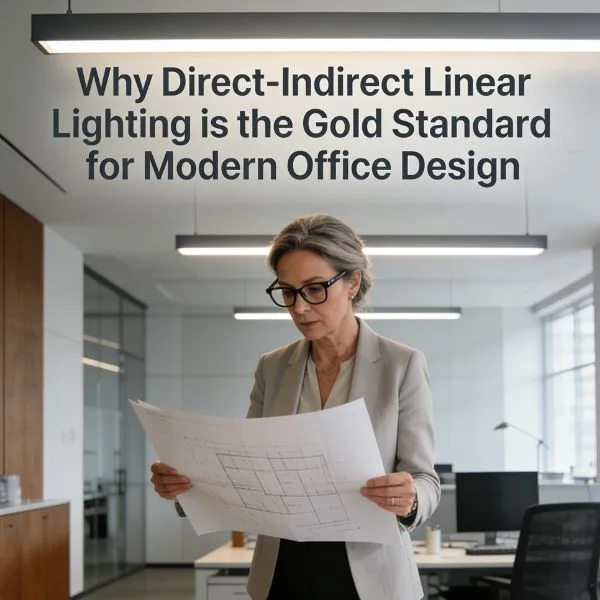
Understanding Direct Indirect Linear LED Lighting Fundamentals
Have you ever walked into an office that measured brightly on a light meter but still felt gloomy and oppressive? That is the dreaded cave effect. As a provider of architectural linear lighting, I often see spaces where architects prioritize foot-candles on the desk while forgetting the ceiling.
To create spaces that feel expansive and comfortable, we have to move beyond simple downlighting. Here is how Direct Indirect Linear LED Lighting systems actually work to solve this:
- Direct Distribution: Focused light directed downward (0-100%). This handles the heavy lifting for task compliance and work surface illumination.
- Indirect Distribution: Light thrown upward (0-100%) to bounce off the ceiling. This provides ambient fill and reduces contrast ratios.
- Direct-Indirect: The gold standard for suspended linear fixtures, combining both to balance task visibility with visual comfort.
The Critical Role of Uplight Downlight Ratio
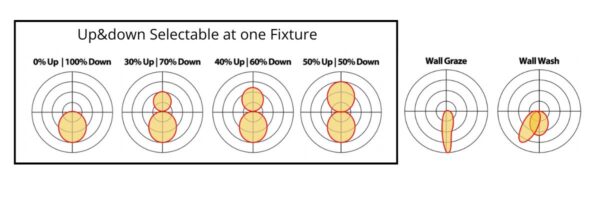
The magic happens in the split. Choosing the right uplight downlight ratio isn’t just a stylistic choice; it dictates the spatial experience and glare control. Here is the breakdown we typically recommend for US office applications:
| Ratio (Up/Down) | Best Application | Spatial Impact |
|---|---|---|
| 90/10 or 80/20 | High-end lobbies, libraries | Creates a “floating” ceiling effect; extremely soft, shadow-free light. |
| 60/40 or 70/30 | Open-plan offices, schools | The sweet spot for glare-free office lighting. Maximizes visual comfort while maintaining task brightness. |
| 50/50 | Conference rooms, retail | Balanced approach; creates a punchier atmosphere while still washing the ceiling. |
| 20/80 or 10/90 | High-bay, industrial lofts | Primarily functional; used where ceilings are too high or dark for effective bouncing. |
Volumetric Brightness: Why It Matters
Why do we push for high-performance pendant direct-indirect luminaires? Because of volumetric brightness.
When you wash a ceiling with light, the eye perceives the room as larger and taller. A dark ceiling pushes the space down; a lit ceiling opens it up. By utilizing the indirect component, you reduce the “hot spots” on the floor and create a uniform wash that softens shadows on faces and screens.
Visualizing the Difference:
- Poorly Balanced (100% Direct): “Cave effect,” harsh shadows, high glare on screens, dark upper walls, straining to the eye.
- Properly Balanced (Direct-Indirect): Seamless integration, walls and ceilings appear bright, room feels spacious, and occupants experience less fatigue.
Whether you are specifying custom direct indirect linear lighting or looking for standard inventory, getting this fundamental distribution right is the first step to a successful lighting plan.
Would you like me to generate a checklist for evaluating the specific lens optics and glare ratings (UGR) for your next paragraph?
Key Technical Selection Criteria for Direct Indirect Linear LED Lighting
Selecting the right fixture isn’t just about the physical profile; it’s about how the light behaves once it leaves the lens. To ensure visual comfort in architecture, you need to dive into the photometry.
Light Distribution and Optics
The biggest mistake I see in architectural linear lighting is ignoring the uplight mechanic. If you use a standard Lambertian (conical) distribution for the indirect component on a lower ceiling, you get a “hot spot” right above the fixture and dark corners elsewhere.
For a uniform ceiling wash that prevents the dreaded “cave effect,” specify batwing light distribution for the uplight. This optical design throws light out at wide angles, allowing you to space rows further apart while maintaining a smooth gradient on the ceiling.
Glare Control and Color Quality
In US corporate and educational spaces, glare is the enemy of productivity. Always check the UGR (Unified Glare Rating).
- Office Standard: Aim for UGR < 19.
- Shielding: Look for deep-recessed lenses or louvered options that hide the LED source.
- Color Fidelity: Don’t compromise on color. High CRI linear pendants (90+) are essential for rendering skin tones and architectural finishes accurately. Ensure the manufacturer guarantees tight color consistency (3-step MacAdam ellipse) so your continuous linear runs don’t look like a patchwork of different whites.
Many of our 2 inch architectural pendant lights are engineered with these specific shielding and high-fidelity color standards to meet strict US office codes.
Ceiling Reflectance and Geometry
Your room geometry dictates your lumen package. A fixture that looks great in a showroom with a 12-foot white ceiling might fail in a room with an 8-foot acoustic tile ceiling.
Quick Guide to Ceiling Integration:
| Ceiling Condition | Recommended Strategy | Key Technical Requirement |
|---|---|---|
| Low Ceiling (< 9 ft) | Maximize beam spread. | Batwing optics essential to avoid hot spots. Lower lumen output for uplight. |
| High Ceiling (> 12 ft) | Focus intensity. | Tighter beam angles to push light down. Higher lumen packages required. |
| Open Structure | Balance contrast. | 50/50 Up/Down ratio to highlight mechanicals without creating glare. |
| Drop Ceiling (Grid) | Control reflectance. | Ensure ceiling tiles have high reflectance (LR > 80%) for maximum indirect efficiency. |
Mounting Options and Architectural Integration
To get the most out of direct-indirect linear LED fixtures, how you mount them is just as critical as the lumen output. The goal is to make the lighting feel like a natural extension of the architecture, not an afterthought bolted to the ceiling.
Mastering Suspended Direct Indirect Linear LED Lighting
For the “indirect” component to work, you need suspension. The light needs space to bounce off the ceiling. In the US market, where open-ceiling offices are the standard, suspended linear fixtures are the go-to solution.
- Aircraft Cable: The most common choice for versatility. It allows for easy field adjustment of mounting height, which is crucial when dealing with uneven concrete slabs or ductwork.
- Rigid Stems: If you are dealing with high-airflow HVAC environments, use stems. Cables can sway in drafty plenums; stems stay put. They also offer a cleaner look by hiding the power feed.
- Alignment: For long rows, alignment clips are non-negotiable. They ensure your pendant direct-indirect luminaires hang in a perfectly straight line, preventing that “snaking” look over time.
For more specifics on securing these systems safely, you can reference our guide on installation for commercial applications.
Recessed and Surface-Mounted Alternatives
Sometimes, ceiling heights drop, and you lose the volume needed for suspension. In these transitions—like moving from an open office to a low-ceiling corridor—you need to maintain the aesthetic without the uplight.
While true direct-indirect requires suspension, we often pair suspended rows with surface-mounted or mud-in recessed linear lights in matching widths. This keeps the design language consistent across the floor plate, even if the distribution changes to direct-only in tight spaces.
Creating Continuous Linear Runs
The difference between a standard install and a high-end architectural finish is the seam. Continuous linear runs should look like a single stroke of light.
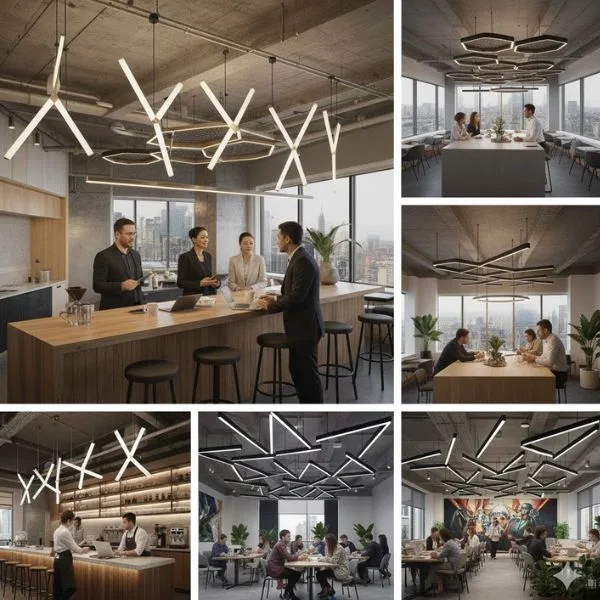
When specifying seamless corner linear lighting (L, T, or X patterns), look for:
- Illuminated Corners: The light engine should wrap the corner. Dark corners break the visual flow.
- Shadow-Free Joins: The distinct lines of custom direct indirect linear lighting must connect without light leaks or dark spots at the lens union.
Aesthetic Profile Choices: Extruded Aluminum Linear Lights
The physical size of the fixture impacts the “feel” of the room.
| Profile Type | Width Range | Best Application |
|---|---|---|
| Micro/Narrow | 1.5″ – 2″ | Minimalist designs where the light source should disappear. Popular in modern tech fit-outs. |
| Standard | 2.5″ – 4″ | The workhorse size. Balances efficiency (more room for drivers/heatsinks) with sleekness. |
| Wide/Acoustic | 4″+ | Statement pieces or fixtures integrated with acoustic felt to dampen sound in open plans. |
Choosing the right extruded aluminum linear lights isn’t just about lumens; it’s about whether you want the fixture to stand out as a design element or blend seamlessly into the background.
Review Our Range of the linear lights from 2″ width to 6″ width Here
Performance, Controls, and Compliance
When we get down to the brass tacks of specifying linear fixtures, aesthetics only get you so far. The fixture has to perform reliably, meet strict US energy codes, and play nice with the building’s control systems. If the driver fails or the lights flicker, the sleekest design in the world won’t save the project.
Dimming and Control Protocols
In modern American architecture, static on/off lighting is practically extinct. You need granular control to balance artificial light with daylight.
- 0-10V Dimming: This is the industry standard for 0-10V dimming linear LED fixtures in the US. It’s reliable, cost-effective, and understood by every electrical contractor from New York to LA.
- DALI & BMS: For advanced projects requiring individual fixture addressing or integration with a Building Management System (BMS), digital protocols like DALI are essential.
Our suspended direct-indirect lighting systems are engineered to integrate seamlessly with these protocols, ensuring smooth, step-free dimming without dropping out at the low end.
Energy Efficiency and Code Requirements
Navigating energy codes is one of the biggest hurdles in lighting design today. We build our fixtures to help you clear these bars effortlessly.
- Title 24 & ASHRAE 90.1: If you are working on the West Coast, Title 24 compliant lighting is mandatory. Our fixtures offer high efficacy (lumens per watt) to meet strict power density allowances.
- LEED Credits: High-efficiency drivers and optics contribute significantly to LEED certification points, specifically in the “Interior Lighting” and “Optimize Energy Performance” categories.
Driver Quality and Thermal Management
The driver is the heart of the fixture. A cheap driver results in visible flicker—a major cause of headaches and eye strain in office environments.
- Flicker-Free: Always specify drivers with <1% flicker modulation. This is non-negotiable for visual comfort.
- Thermal Management: LEDs hate heat. We use substantial aluminum extrusions that act as heat sinks, pulling heat away from the diode. This ensures the long-term maintenance stats (L70 or L80) hold true, meaning the light won’t fade prematurely.
Pro Tip: Always check the warranty terms. A solid 5-10 year warranty indicates the manufacturer trusts their thermal engineering.
Would you like me to create a checklist for evaluating driver specifications in your next submittal review?
Application Strategies for Direct-Indirect Linear LED Fixtures
One size rarely fits all in American architecture. The magic of direct-indirect linear LED fixtures lies in how you tune the distribution to fit the specific function of the room. Here is how I recommend approaching the four most common applications to ensure you are specifying the right tool for the job.
Corporate Offices: Glare-Free Productivity
In open-plan offices, the biggest enemy is the “cave effect”—where ceilings are dark and contrast is too high, leading to eye strain. To combat this, I prioritize glare-free office lighting.
- The Strategy: Use a fixture with a higher uplight downlight ratio (like 70% up, 30% down).
- The Result: This floods the ceiling with light, reducing the contrast between the fixture and the surface. It eliminates screen glare on monitors, preventing cave effect prevention, and keeps the staff alert and comfortable throughout the workday.
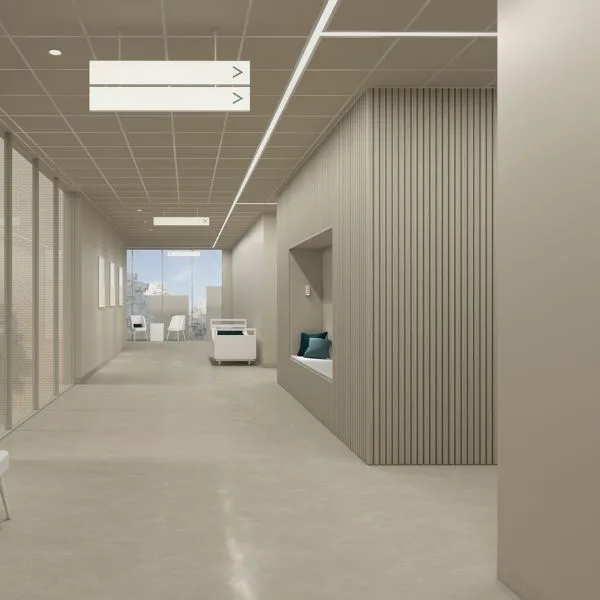
Healthcare Facilities: prioritizing Patient Comfort
Healthcare environments require a delicate balance between visual comfort in architecture and clinical utility. Patients often spend hours looking directly at the ceiling.
- The Strategy: Avoid high-intensity direct downlighting over beds.
- The Result: By leaning heavily on the indirect component, we provide a soothing ambient glow for the patient. Meanwhile, the direct component should offer high CRI (Color Rendering Index) to ensure staff can accurately assess skin tones and read charts without shadowing.
Education and Conference Spaces
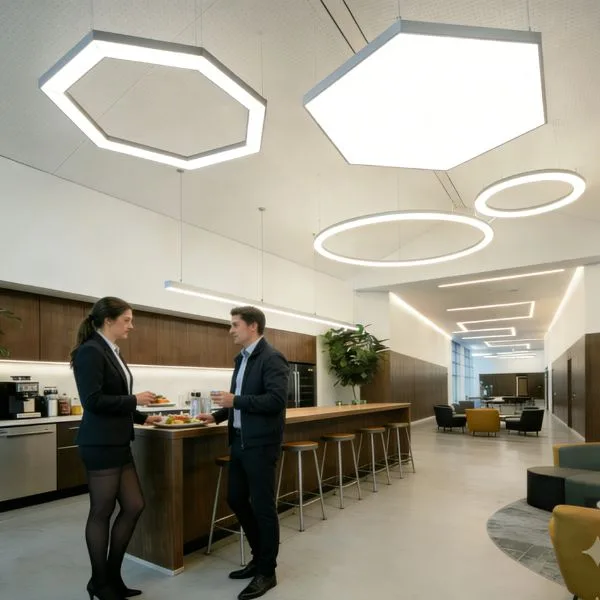
In classrooms and boardrooms, lighting needs to define the space and support collaboration. Standard rows are fine, but geometric shapes often work better here to center the attention.
- The Strategy: Utilize architectural linear lighting to mirror the room’s layout.
- The Result: For conference rooms, we frequently see architects specifying L-shape modular linear lights to create continuous rectangles over tables. This provides shadow-free illumination for face-to-face meetings and video conferencing, ensuring everyone looks their best.
Retail and Hospitality: Atmosphere and Drama
Here, efficiency takes a backseat to emotion. The goal is to make the space feel expansive and inviting.
- The Strategy: Use custom direct indirect linear lighting to highlight merchandise or architectural details.
- The Result: A well-balanced fixture can wash the ceiling to make a boutique or lobby feel taller and grander. By controlling the direct output, you can create pools of light that guide the customer’s journey through the space, adding drama without the visual clutter of multiple track heads.
Next Step: Would you like me to create the “Practical Specification Checklist” to help you vet manufacturers for your next project?
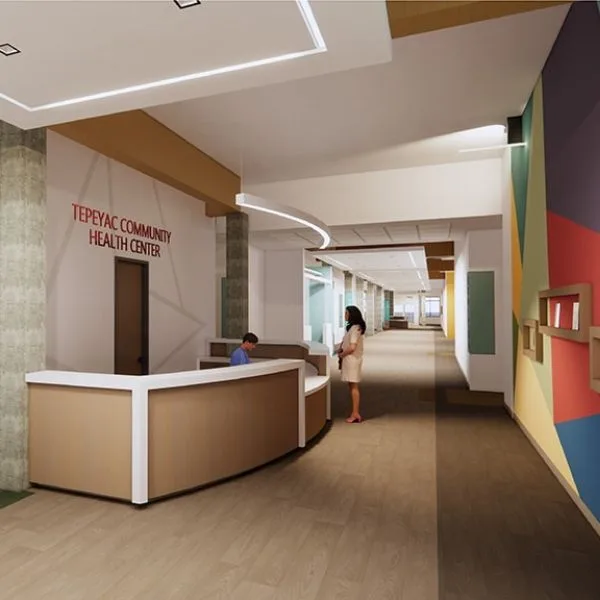
Practical Specification Checklist for Direct-Indirect Linear Fixtures
Specifying architectural lighting is where design intent meets engineering reality. You cannot rely solely on a catalog image; you need to dig into the mechanics of the fixture to ensure it performs once installed. As a platform owner who deals with these products daily, I have compiled a checklist to keep your project on track and avoid expensive change orders later.
Questions Every Architect Should Ask Manufacturers
Before you lock in a spec for direct-indirect linear LED systems, put the manufacturer on the spot with these questions. It cuts through the marketing noise and gets you the data you need.
- “What is the exact binning tolerance?” You need consistency. Ensure they stick to a 2-step or 3-step MacAdam ellipse so your run doesn’t look like a patchwork of different white tones.
- “How do the joining mechanisms work?” Demand a demonstration of the mechanical connection. Is it tool-free? Does it prevent light leaks at the seams?
- “Is the driver integral or remote?” This affects your ceiling aesthetics and maintenance plan. Integral drivers are easier for maintenance but make the fixture bulkier; remote drivers require a planned location in the plenum.
- “Can you provide IES files for my specific run length?” Standard files often only show a 4-foot section. For continuous linear runs, you want data that reflects the actual accumulation of light.
- “What are the safety certifications?” Never compromise on compliance. Make sure you are selecting UL certified linear LED lighting to guarantee the fixtures meet strict US electrical and safety codes.
Red Flags to Avoid in Submittals and Mock-ups
When reviewing submittals or physical samples, certain issues should trigger an immediate pause. If you see these, it’s a sign the product might not hold up in a commercial environment.
- Vague Warranty Terms: If the driver and the LED board have different warranty periods, that’s a problem. Look for a comprehensive 5-year (or longer) system warranty.
- Poor Heat Dissipation: On a physical sample, run the light for 30 minutes. If the housing gets uncomfortably hot, the thermal management is poor, leading to early LED failure.
- Inconsistent Lens Illumination: Look for “hot spots” or shadows where LED tape sits. The lens should be evenly illuminated from end to end.
- Generic Photometrics: If the submitted data doesn’t match the specific uplight downlight ratio you requested (e.g., they submit a 50/50 file for a 70/30 fixture), reject it.
The Non-Negotiable: Photometric Files and Physical Samples
Computer renderings are great for selling a concept, but they don’t tell the truth about visual comfort. You must request photometric files (IES data) to run your own calculations in AGi32 or Revit. This verifies that you are achieving the correct foot-candle levels on desks without creating a “cave effect” on the ceiling.
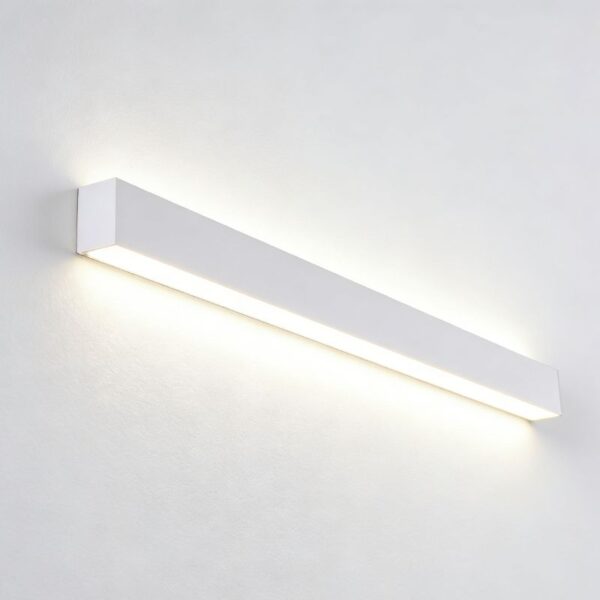
Furthermore, never specify a large quantity without holding a physical sample. Check the build quality of the end caps and the finish of the extrusion. If you are coordinating a suspended system with a matching direct-indirect wall light, inspect both samples side-by-side to ensure the color temperature and finish are identical. A physical mock-up is the only way to guarantee the fixture meets your standards for glare-free office lighting.
Related Sources
STAY IN THE LOOP
Subscribe to our free newsletter.
Leave A Comment
Learn how 0–10V dimming works in commercial LED linear lighting, including wiring, drivers, control compatibility, applications and troubleshooting.
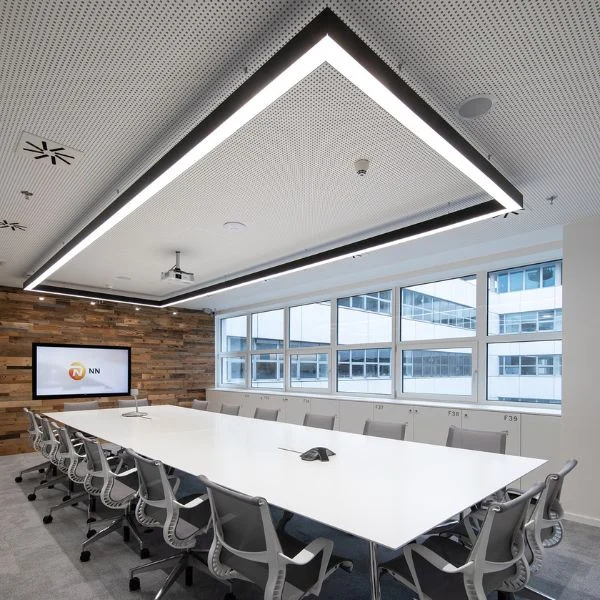
Office Lighting Design Guide for Modern Workplaces with lux UGR and LED fixture tips for comfort productivity and energy efficiency
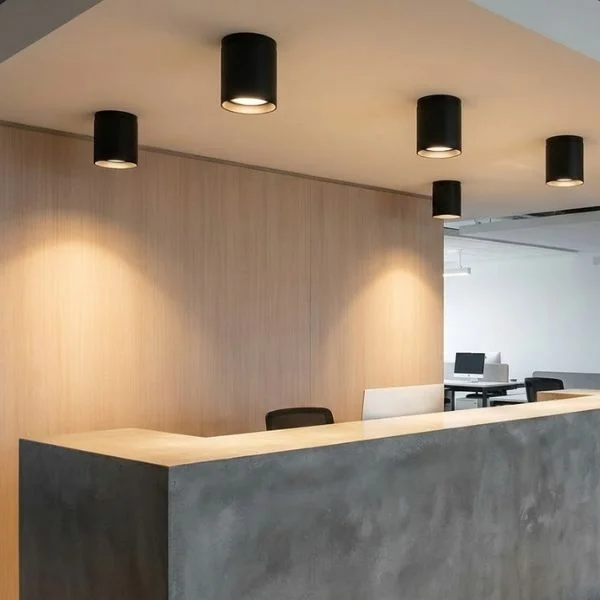
Ever wonder why an outfit looks vibrant in natural sunlight, [...]
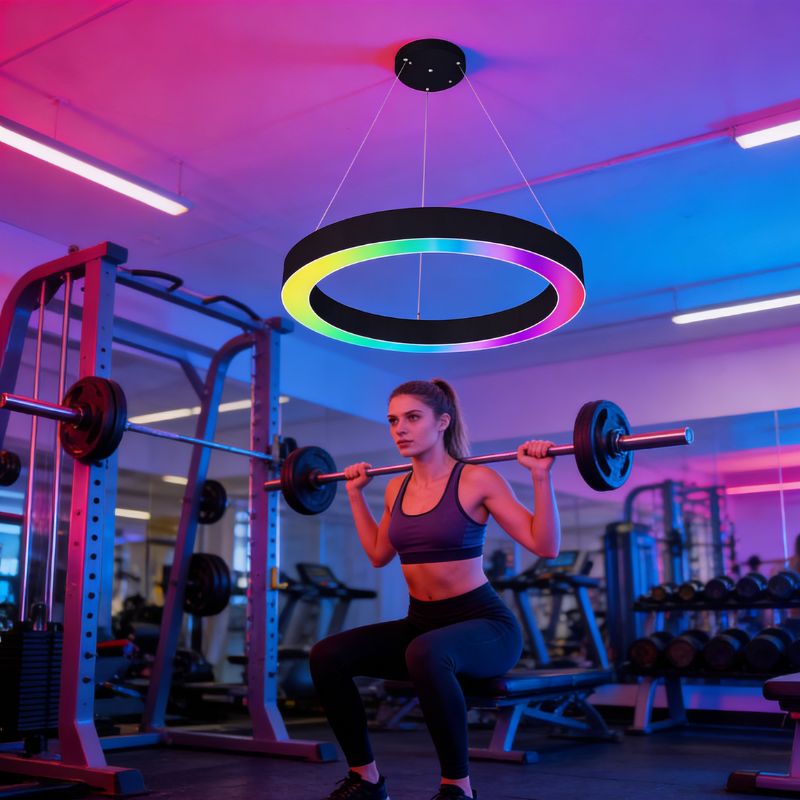
What is Tunable White Lighting? As the industry standard evolves, [...]